As summer ’25 arrived and the Balearic Sea warmed, it felt like the perfect time to plan my next dive, a reminder of why I love learning skills that last. Over a year had passed since my last dive. I’d been climbing mountains and running roads, but I longed to get back underwater. Sure, you can dive anytime, but sun-drying between dives makes it even more enjoyable.
The Dive Experience
There’s a special kind of calm that hits the moment you step off a boat and into the deep blue.
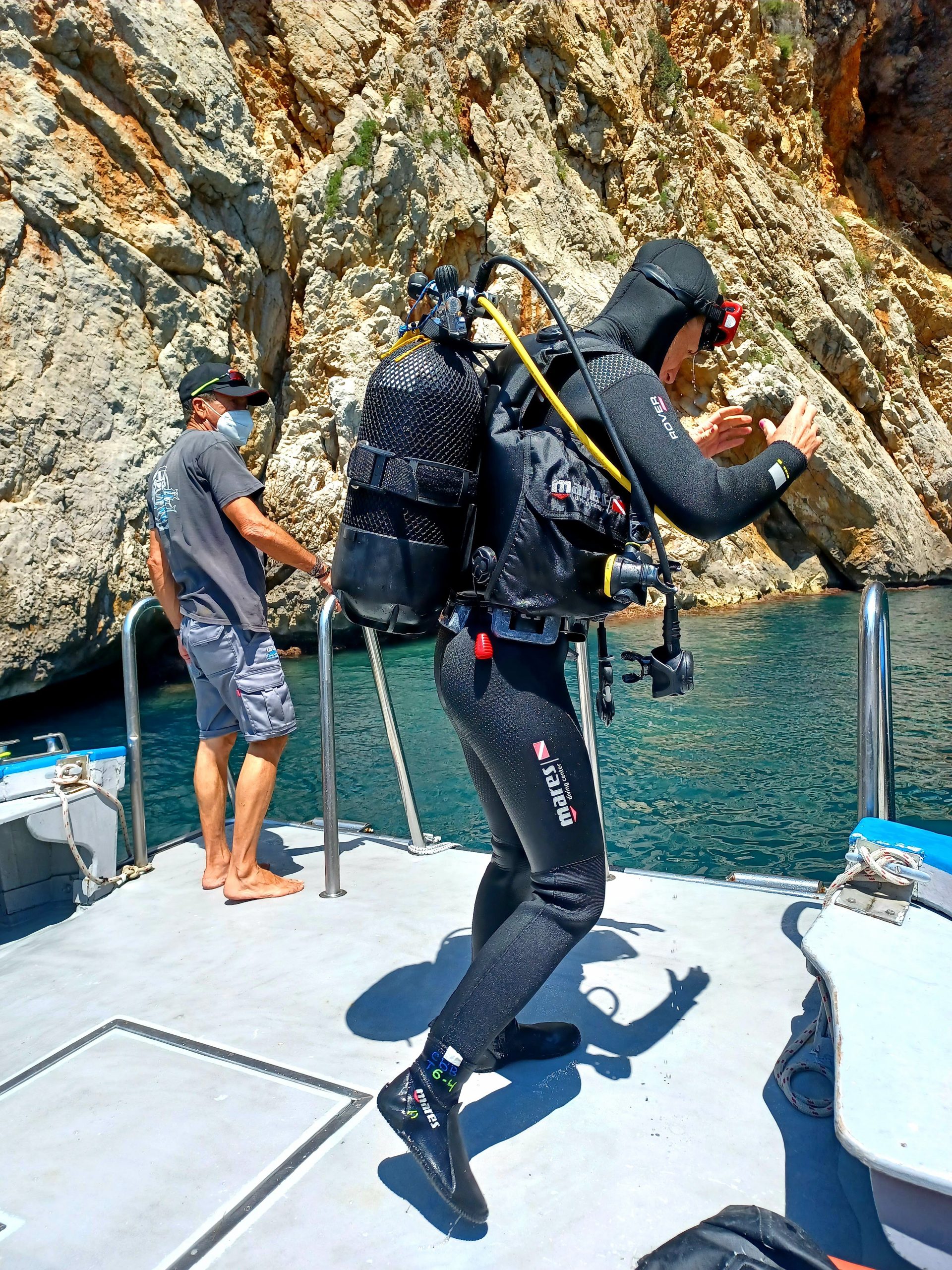
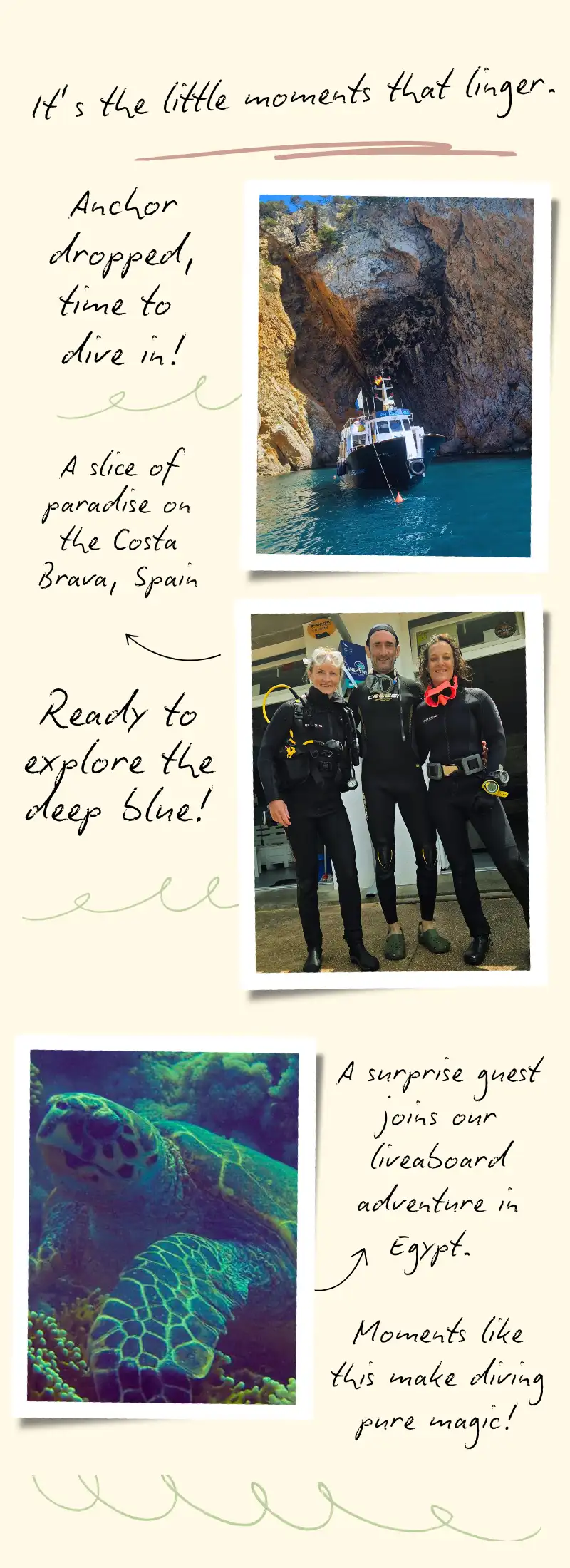
This trip took me to Palamós, on the Costa Brava. We arrived at the dive centre, got fitted for wetsuits, rented our gear, and boarded the boat. There’s always a touch of nervousness, diving isn’t something I do every day. A refresher is always helpful.
Once I reviewed key details with my dive buddy and stepped onto the boat, I felt fully ready. With wetsuit on and gear checked, it was time to enter the water and see what awaited me.
There’s something transformative about putting on a wetsuit. All your focus narrows to the dive ahead and the people you’re with.
The Magic of the Underwater World
As easy as it is to get distracted by a flash of marine life, it’s important to keep your diving buddy in sight. Checking air levels, signaling that all is okay, it’s reassuring to know someone has your back. After descending and finding that sweet spot of neutral buoyancy (which I honestly struggle with, but with practice, you learn to control with your breath), we glided through the water together.
My buddy pointed out barracudas, gorgonians, and a few curious groupers. I was completely absorbed in the wonders of the underwater world.
A Skill That Lasts
In 2013, I travelled by campervan from Melbourne to Darwin and then on to Cairns. Visiting Australia and learning to dive on the Great Barrier Reef was my first real introduction to an adventurous life. No longer was I flicking through magazines, mesmerised by coral and marine life, I was actually floating among it, exploring it firsthand. I often think back to that decision over 15 years ago. At the time, I had no idea how far it would take me. It’s bittersweet now, knowing how much the reef is under pressure from climate change and human impact, according to WWF.
Fast forward to 2019, and I found myself on a liveaboard trip in Egypt, building on my Open Water certification to earn my Advanced Open Water Diver and Enriched Air Diver credentials. What began as a diving holiday had become a classroom on the sea, with skilled divers exploring the reef morning, noon, and night.
Diving and Life Lessons
Since then, diving has been an on-and-off part of my life. I’ve filled two dive logbooks with memories: the people I’ve met, the places I’ve explored, and the creatures I’ve spotted.
Diving isn’t just my escape, it’s a reminder that there’s more to life than the everyday. Phone calls, notifications, and social media fade away. For that time, it’s just you and the incredible underwater world. The ocean demands your full attention, not only for safety, but because this kind of beauty isn’t something you encounter every day. Every dive leaves me feeling lucky, and even thinking back on them still gives me goosebumps.
The Value of Lifelong Skills
Once you earn a diving certificate, it’s yours for life. Keep your skills fresh, and they remain a source of joy. To think I started back in 2013 and am still an active diver in 2026 says a lot, it’s a reminder that investing in skills pays off far beyond the moment.
You can even take it a step further. Knowing the benefits of having lasting skills, you might treat a friend to an Open Water course for their birthday, a hiking trip, or a painting class. That first-time experience could spark a passion that changes their life.
Research from UCLA Health shows that having hobbies can boost mental well‑being, improve cognitive function, and support overall health by reducing stress and enhancing life satisfaction.
It makes me ask: what else could I learn now that would serve my future self as well as diving has? A skill, a practice, a sport, something I’ll be grateful for years from now.
Here’s to learning a new skill at any stage of life. Choose something that lasts, grows with you, and that your future self will thank you for.
Resources to Help You Grow
1. You can learn new things at any age, with Rachel WU, Phd
Psychologist Rachel Wu explains how adults can continue to learn and develop new skills, challenging the notion that learning is only for the young.
2. Essentials: How to learn skills faster – Dr. Andrew Huberman
Science-based strategies to accelerate skill acquisition.
Skills That Last: Quick Checklist
- Step 1: Identify a Skill
Pick a hobby, practice, or course you’ve been curious about…diving, painting, hiking, anything that excites you. - Step 2: Reflect on Its Value
Will this skill grow with me over time?
Could it bring joy or utility for years?
Does it connect me to new people, places, or experiences?
Can I keep practicing even if life gets busy?
Will my future self thank me for learning it? - Step 3: Take Action
Start the skill that checks most boxes.
Pause or reconsider anything that feels fleeting or unaligned.
Commit small steps weekly to keep momentum. - Step 4: Make It Practical
Pick one specific action today to begin practicing your chosen skill.
Journal briefly: “What progress did I make, and how does it bring me closer to my future self?”