My Mera Peak Journey
Why Mera Peak
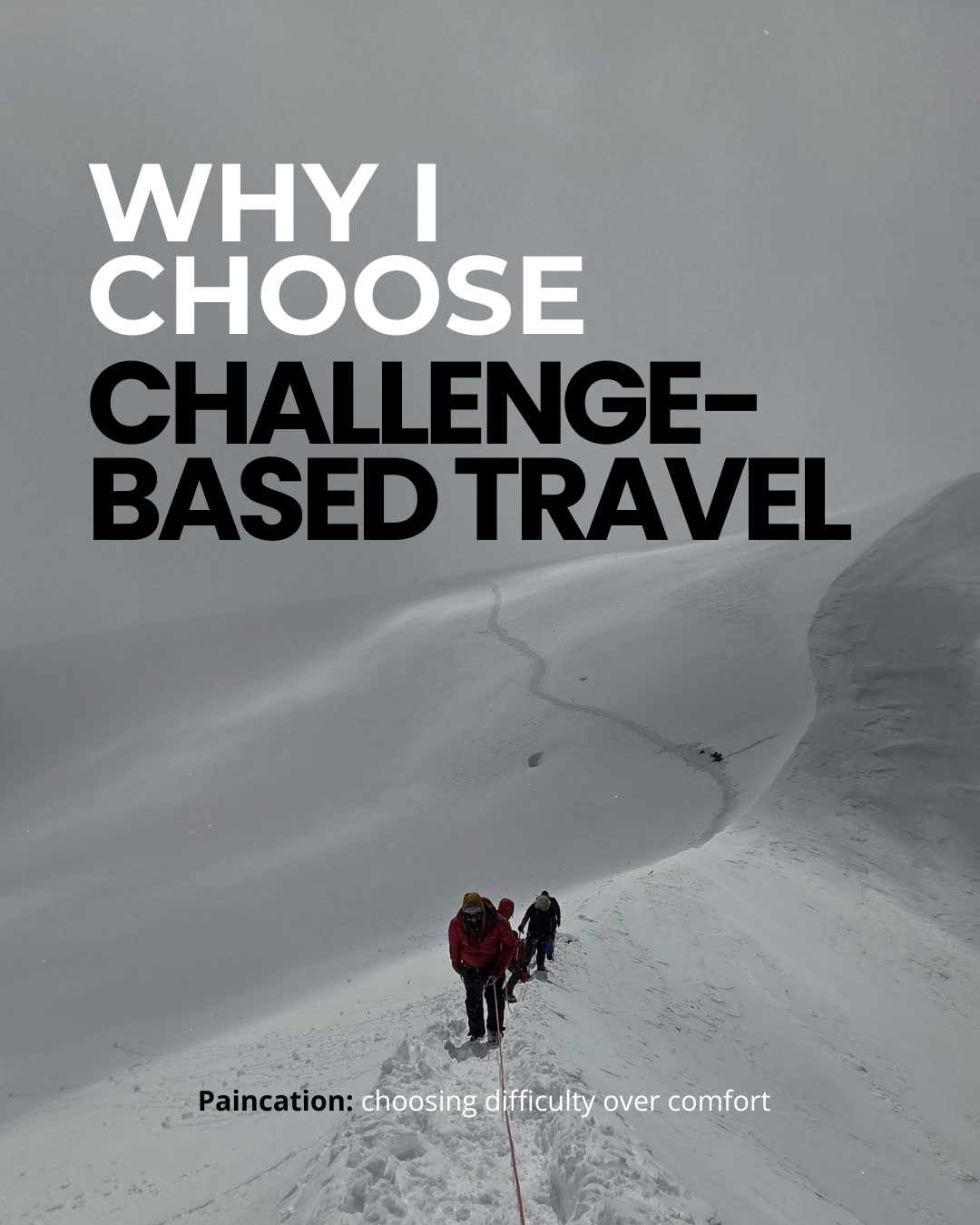
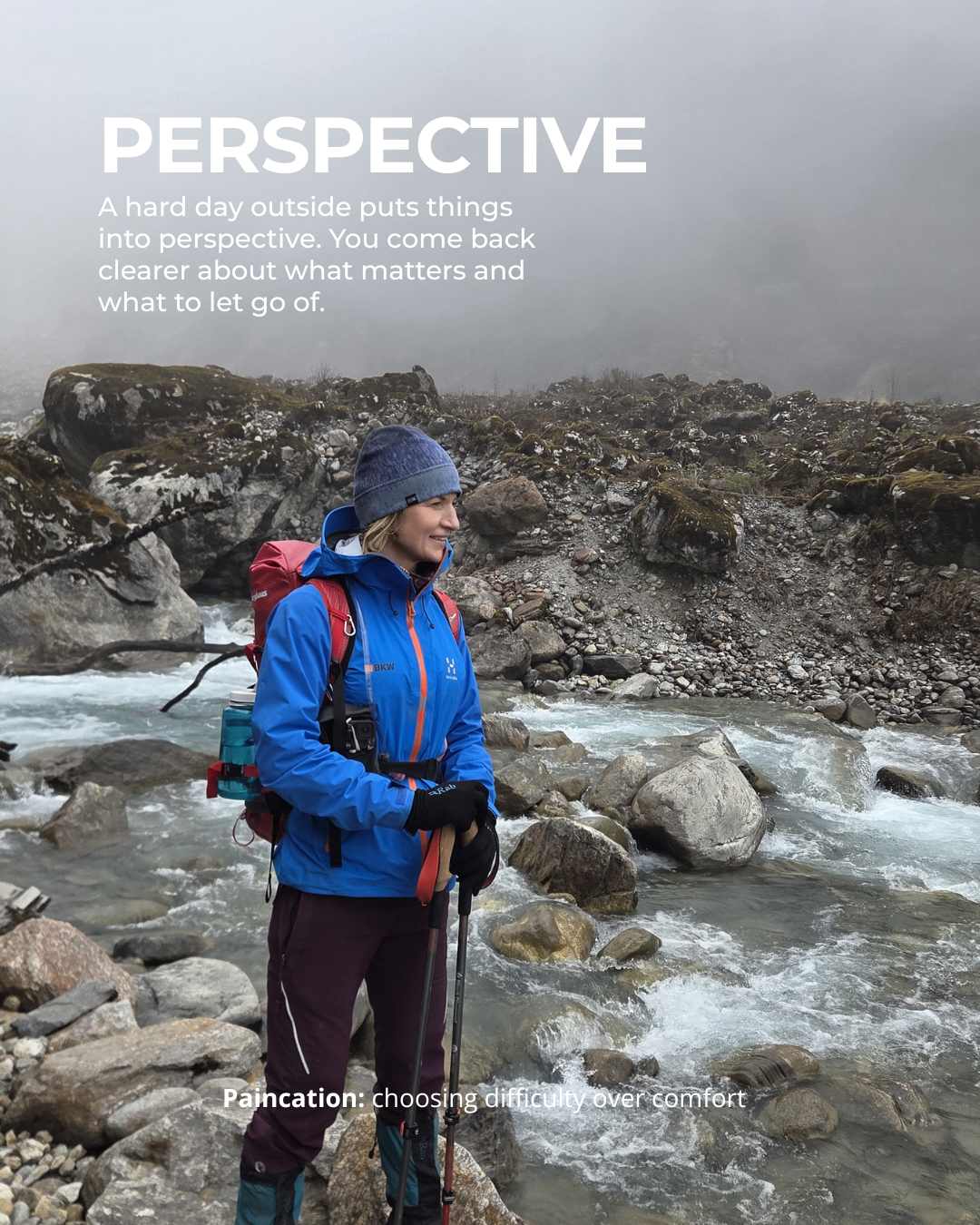
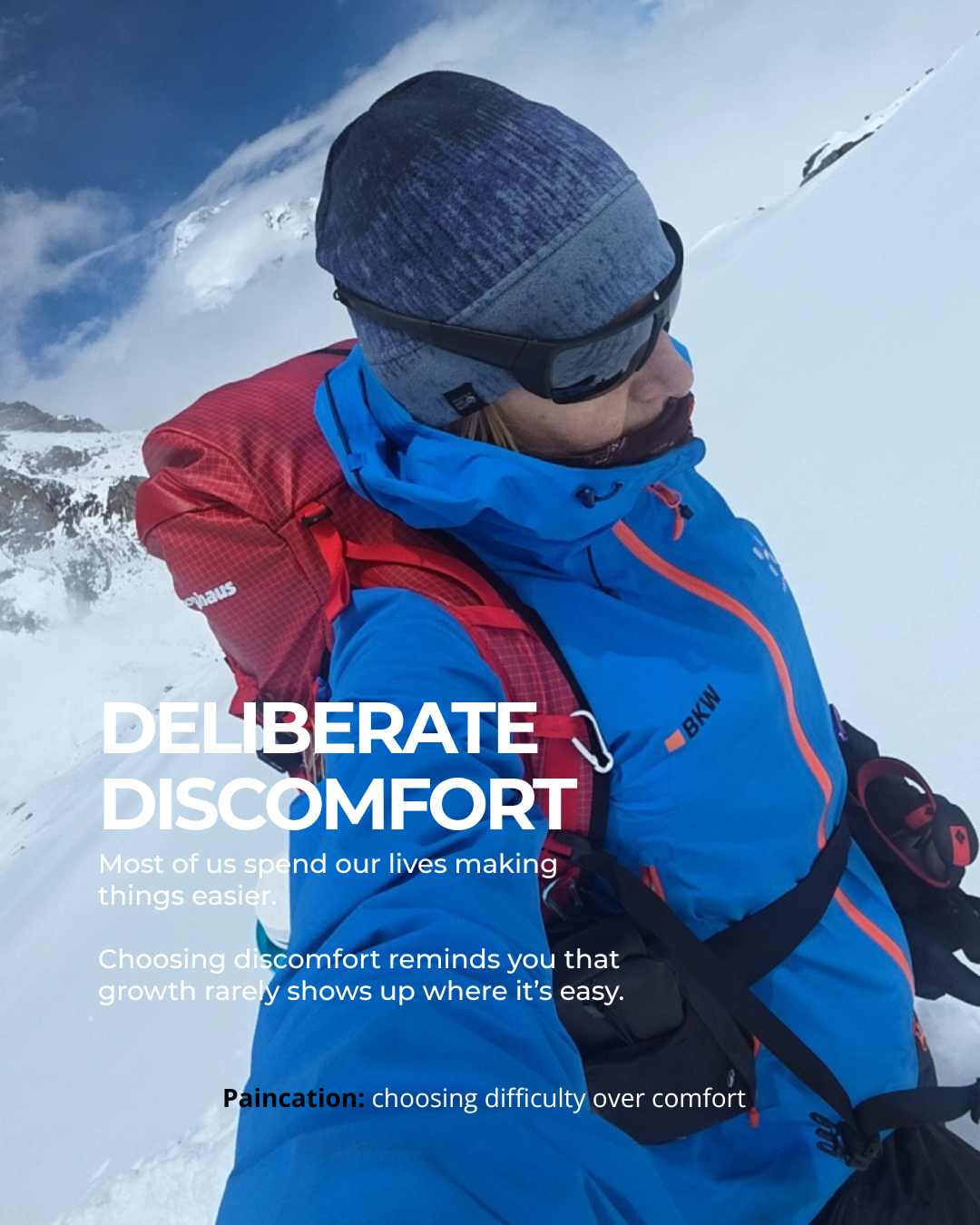
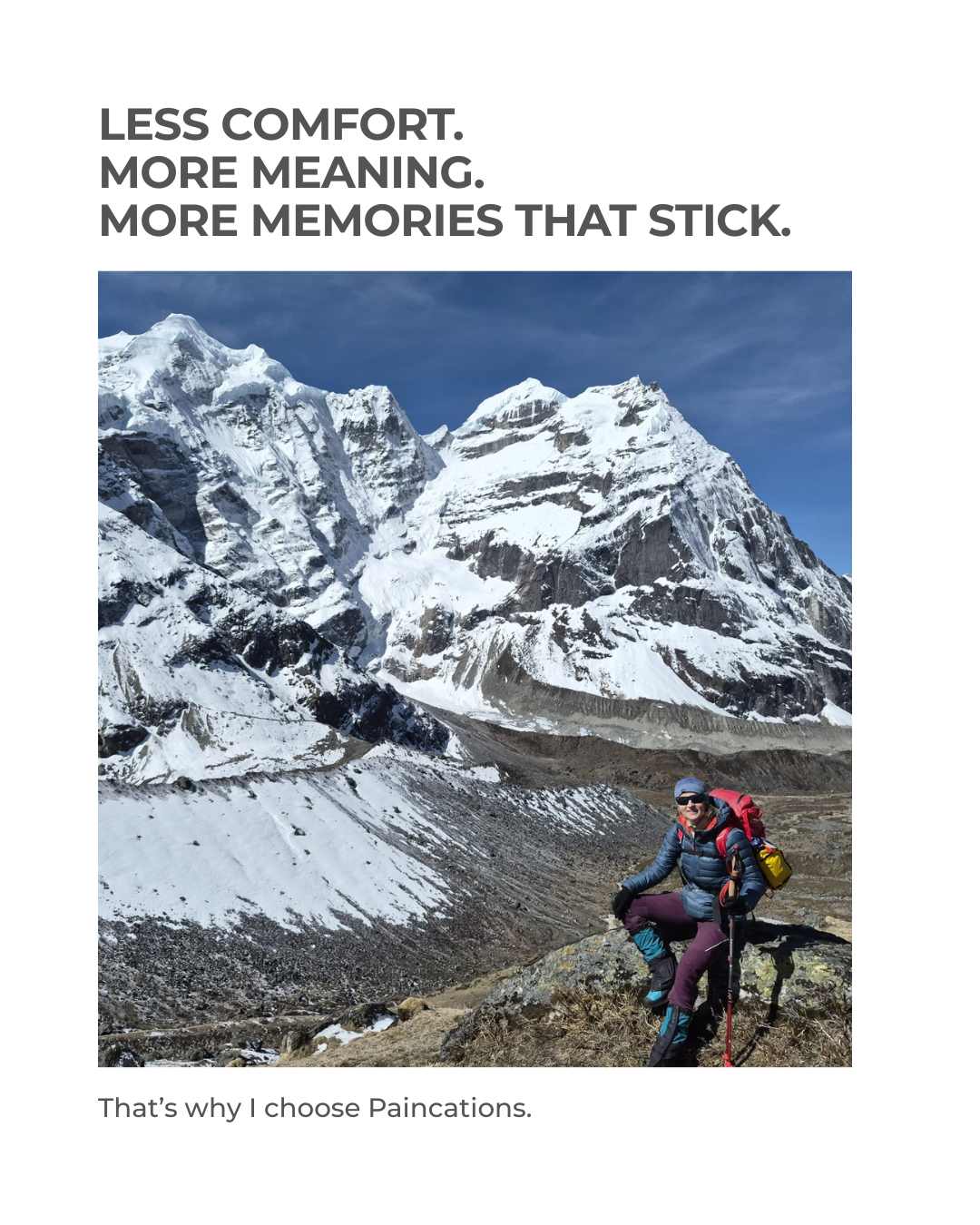
I tend to choose challenge-based travel. Some people would probably call it a “paincation.” And sometimes there is pain!! It sounds like the opposite of enjoyment, but for me it’s where I feel a burst of energy and excitement.
At home, everything is easy. If I have my phone, I can organise almost every part of my life, book gym sessions, stay connected with friends, order food, retail shopping and receive reminders I never even set myself. Life becomes frictionless and I can become lazy.
And that’s exactly the problem. Comfort can slowly turn into default mode. Unless you chose otherwise. Which is why I gravitate towards challenge-based travel.
Mera Peak had been on my mind for nearly two years. Looping in and out of my mind each year. This time I had to get honest about it: was this something I actually still wanted or an outdated idea.
There’s a relief in making that decision, whether you commit or let it go. But committing is different. It removes the safety of “maybe.”
I’ve climbed before, and I went back to those experiences to remind myself why I wanted to climb Mera Peak. I remember the long, relentless climb of Mont Blanc, dehydration from a frozen water pack, the exposed ridge lines of Gran Paradiso, the loose ash underfoot on Misti Volcano. None of it was easy, but I loved it and still think back fondly to those adventured. There proof I dealt with discomfort before and adapted to it.
That mattered. Eventually, I stopped circling it and booked the trip.
Leaving Comfort Behind
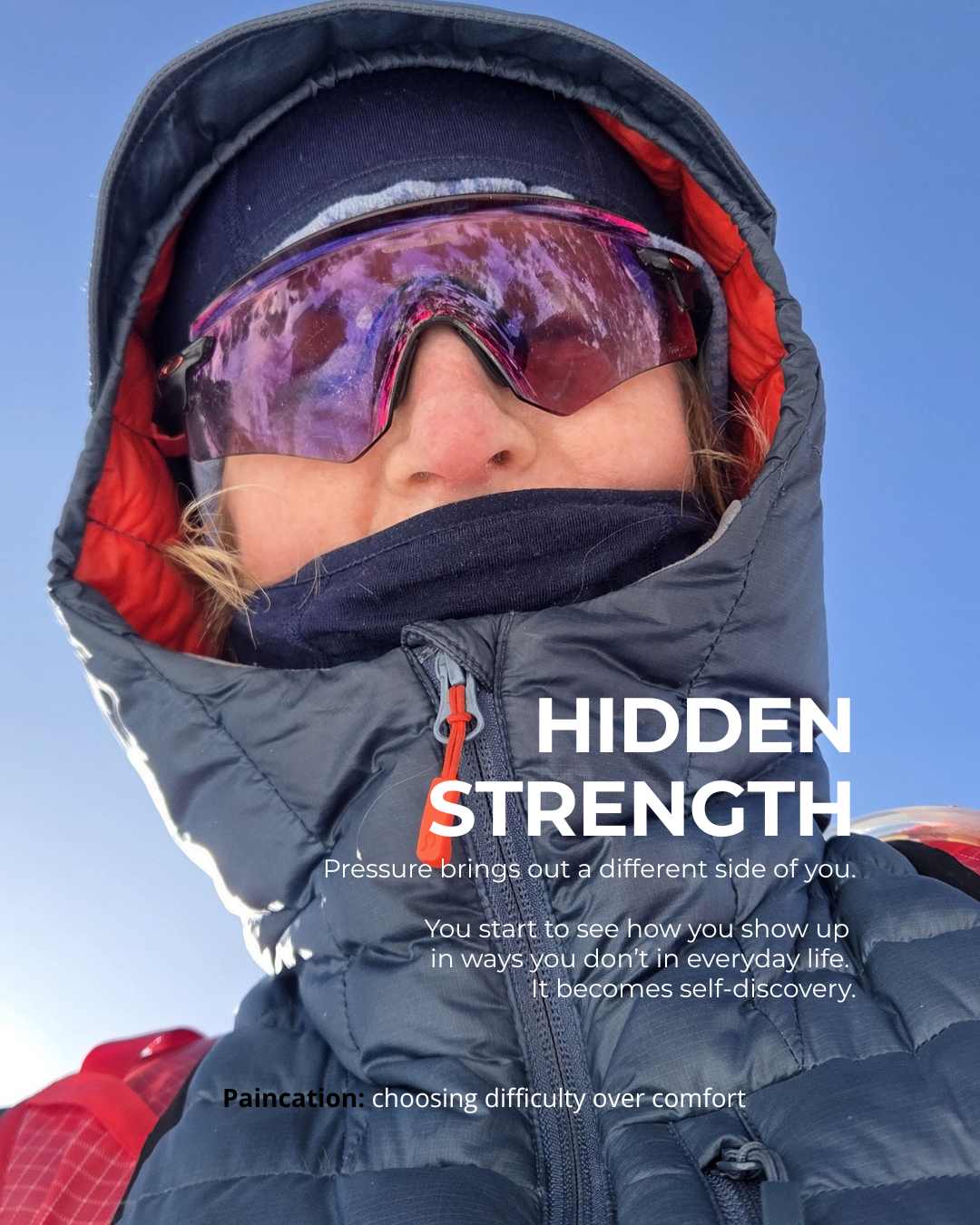
The challenge started long before landing in Nepal. It started with gear lists, layering systems, and trying to figure out how to pack for temperatures below -25°C without carrying everything I owned. There was alot of time researching, choosing carefully. I managed to buy some 2nd hand pieced online to try reduce the cost.
The trip properly began when we landed in Lukla.
If you’ve heard of Lukla flights, you know how unpredictable they are. Weather shifts quickly, and flights can be grounded for hours or even days. We were lucky to get out the same day. We didn’t want to lose our buffer days this early on.
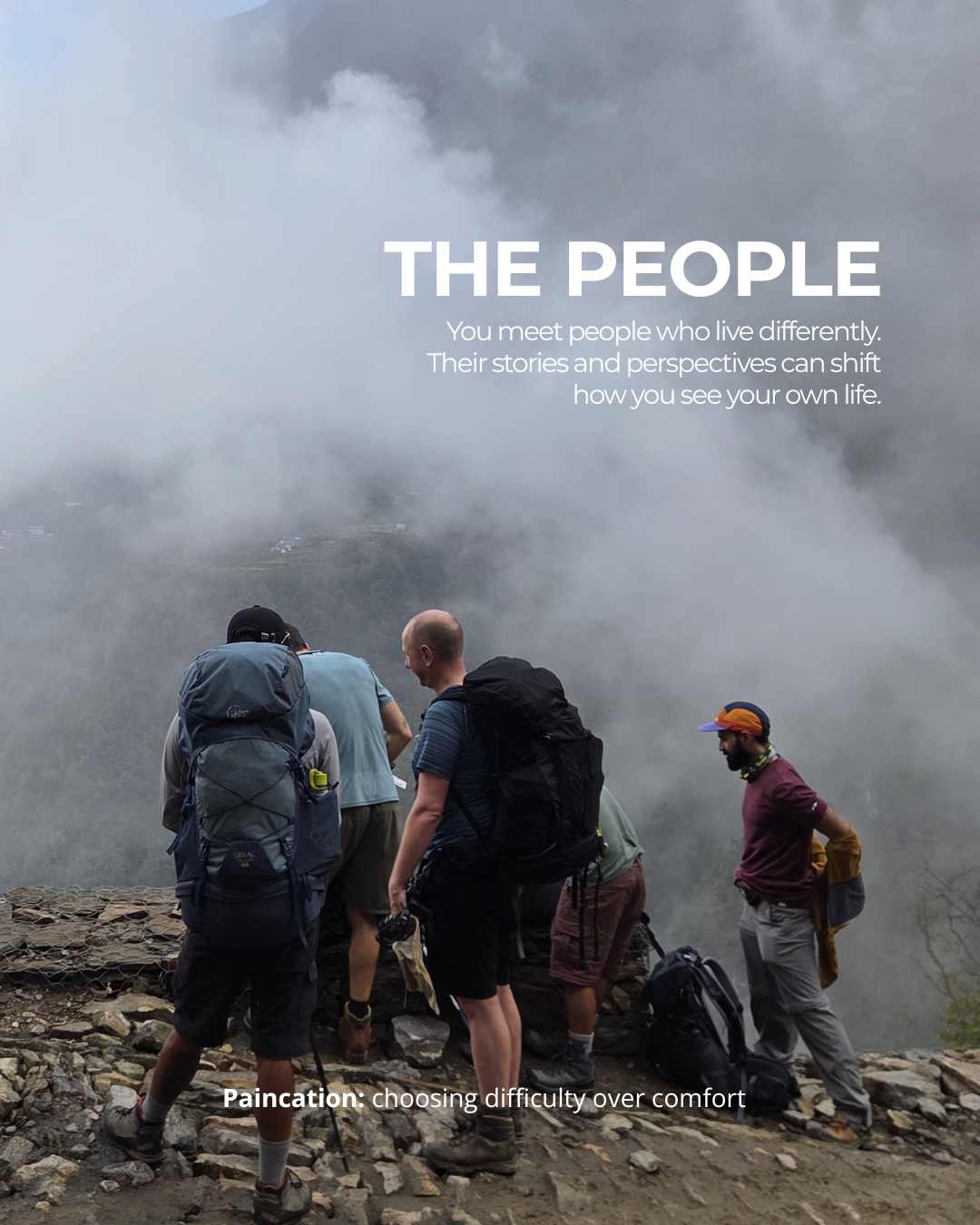
I met the group properly at this point, eight of us in total, five men and two women. All were solo travellers. That made things easier. There’s a different dynamic when everyone arrives alone. No fixed pairs, no existing bubbles.
Not long after we landed, the trek began.
That moment, stepping onto the trail I’d been thinking about for two years felt very satisfying. We spend so long holding ideas in our heads. In reality, most of them sit one decision away from becoming real.
That first day, the rain came in and didn’t really stop. Signal dropped almost immediately. One moment you’re connected, the next you’re not. No transition. Knowing there would be occasional WiFi later helped.
The forced disconnect was surprisingly welcome. No pings, dings, calls, or alerts. It broke the habit of constant checking and made space for the environment to take over and for the group to actually get to know each other without phones getting in the way.
We moved straight into undulating forest trails, constant ascent and descent, slow pace set by the guide. It was good to be active and moving.
Daily life simplified quickly.
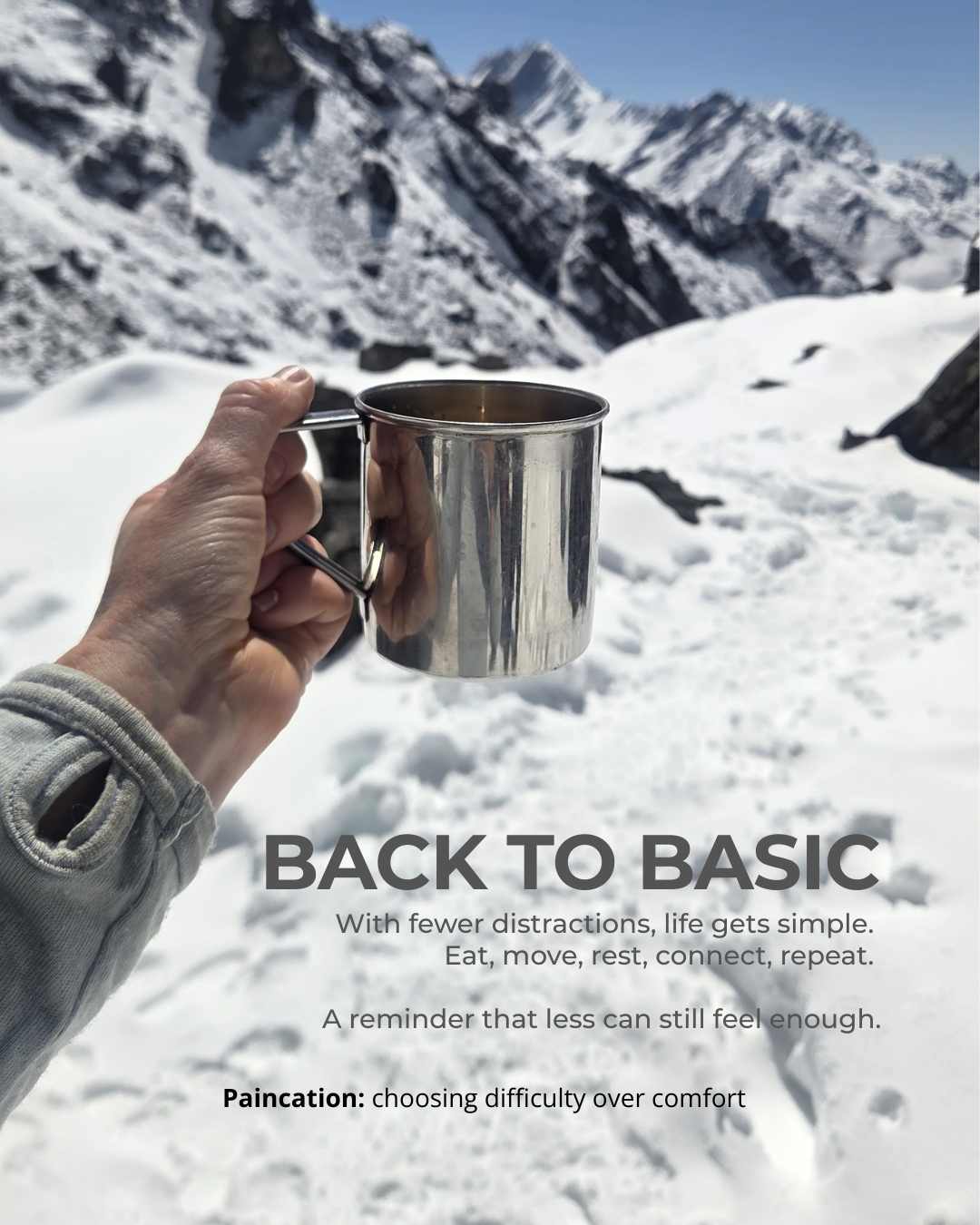
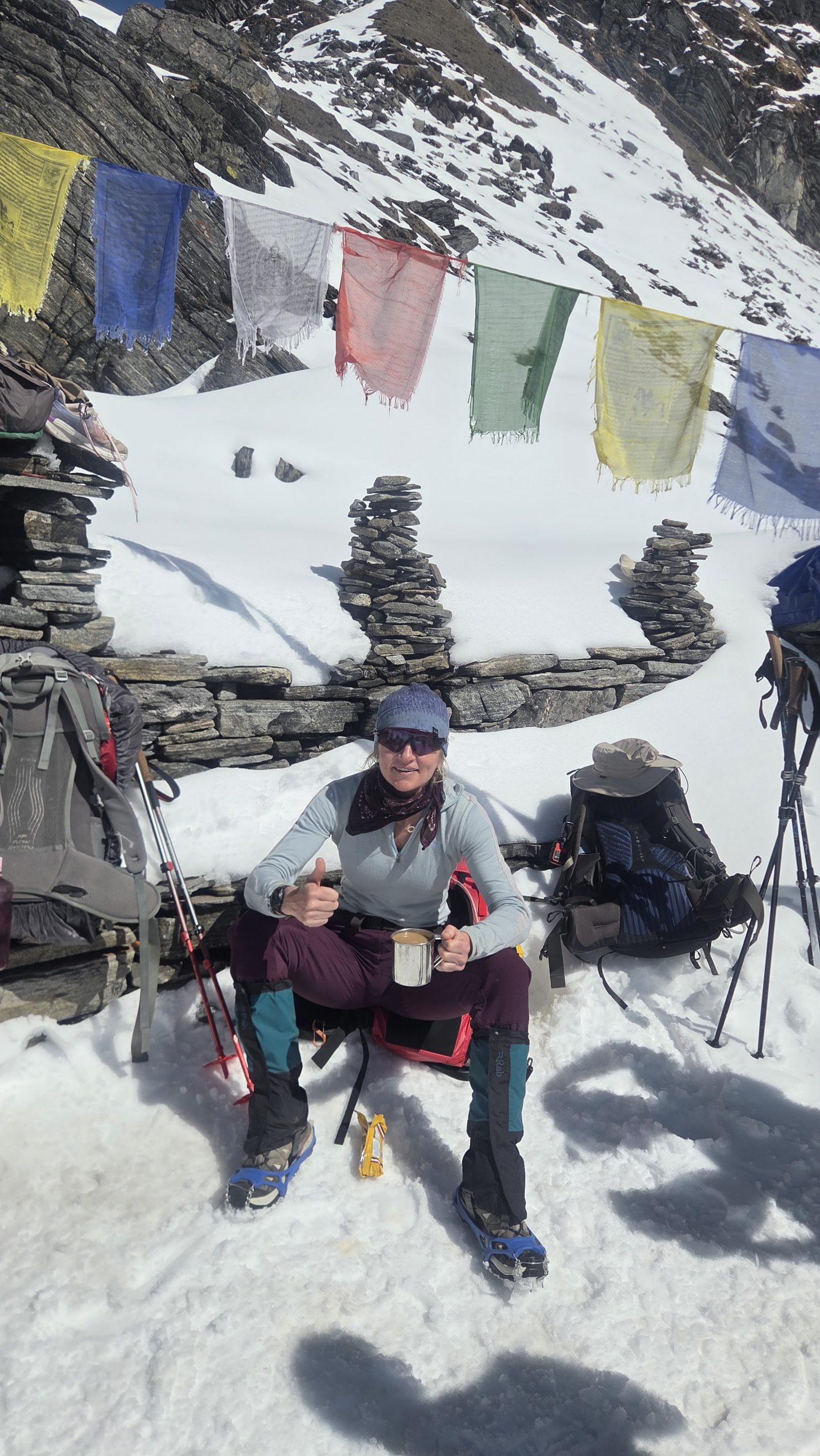
Showers became occasional. Wet wipes became normal. Clothes were reused until they needed washing. Squat toilets were standard. Food stayed consistent: off the menu my go-to was dal bhat, porridge, pancakes. Water was always treated with purification tablets.
Evenings were about playing cards, reading, journaling, masala tea around a stove. and rolling out the sleeping bag for 8.30 bedtime. I kept having the same thought: this is exactly what I came for.
I don’t think I’ve earned the right to complain about discomfort when the Sherpas arrive at each lodge well ahead of us with our duffel bags on their backs, always smiling. Their strength is extraordinary. Without them, none of this would be possible.
First Glimpse of Mera Peak
By day five, we reached Ramailo Danda (3,276m). A couple of days earlier, a team member had to turn back due to altitude sickness. I felt gutted for them, and relieved that I was still feeling physically fine, helped i’m sure by altitude medication. The side effects did mean frequent pee stops along the way. You can imagine that on a trail shared with other men and guides, that becomes a little awkward at times, but in the end it’s nature and you just get on with it.
We were now down to seven.
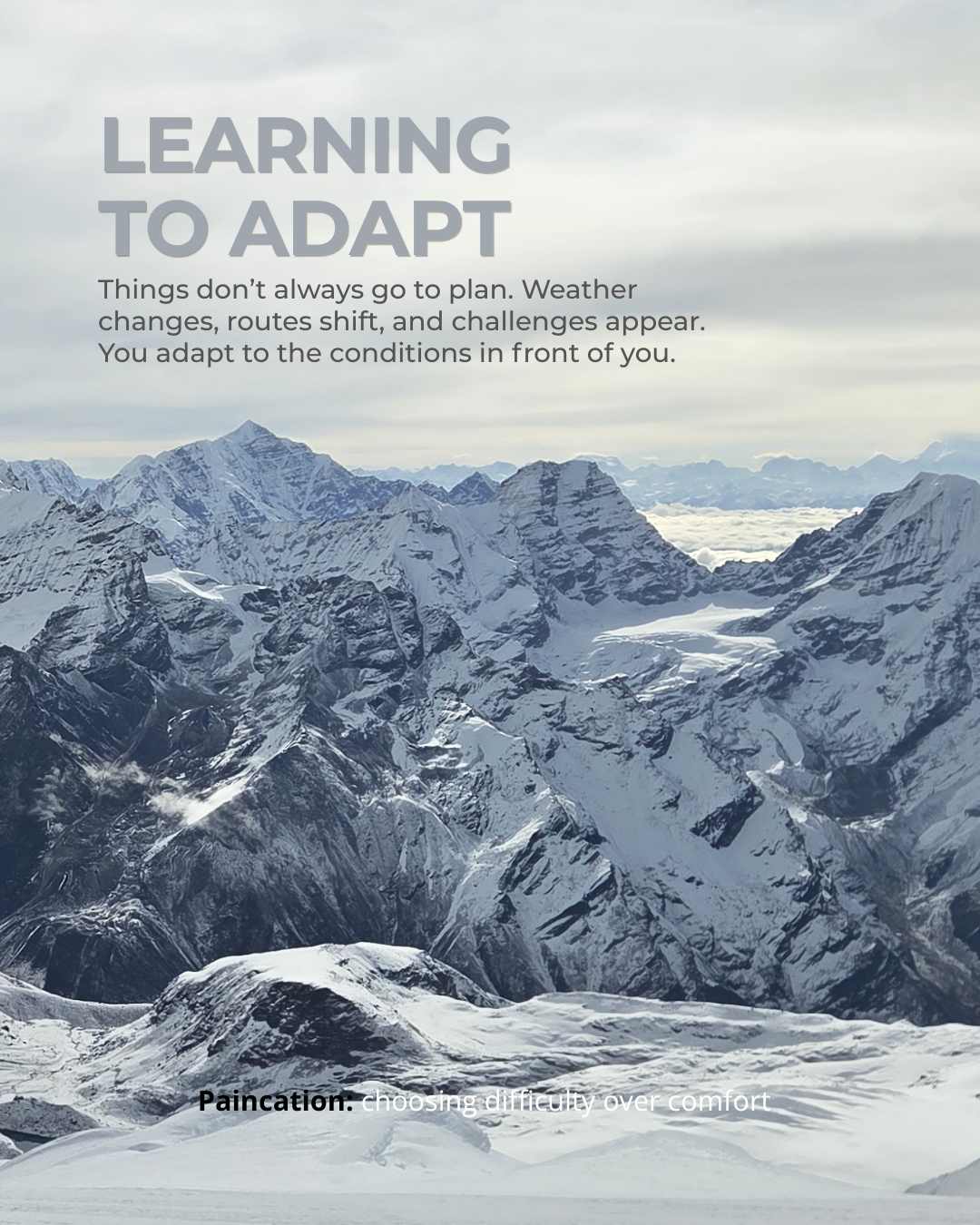
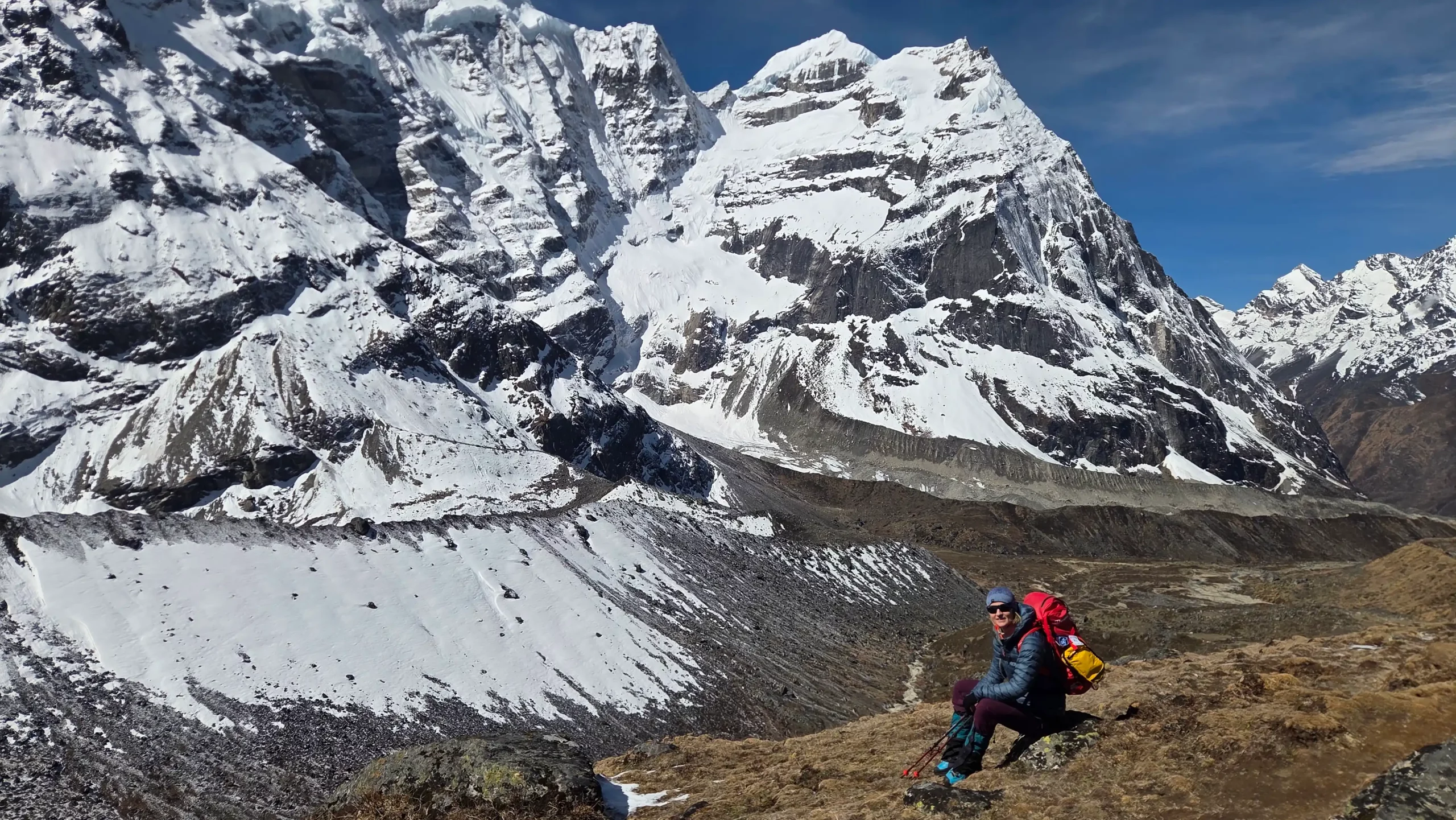
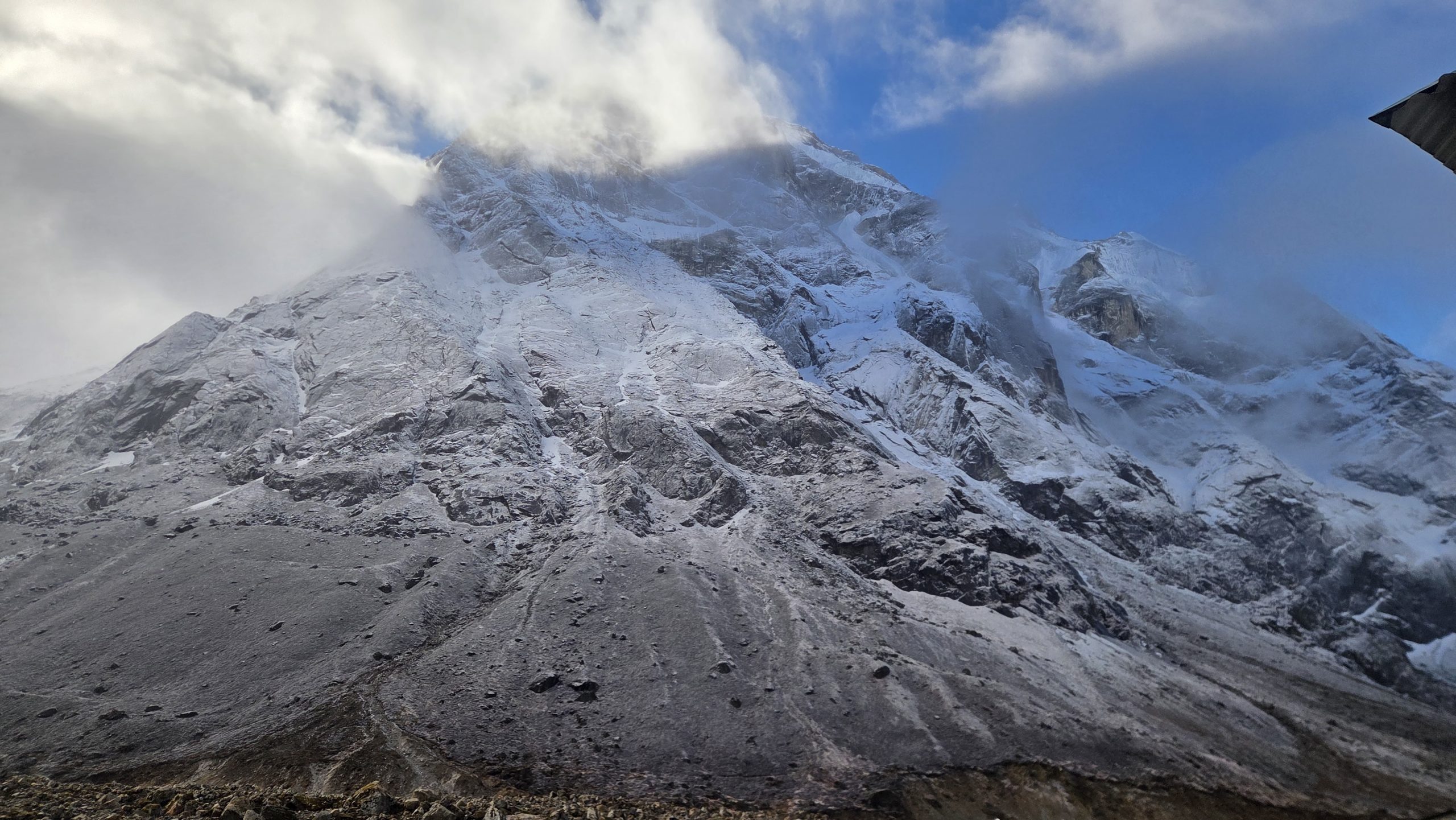
We got our first clear view of Mera Peak that same day.
We were sitting in the lodge, ordering dinner, when the mist shifted and the mountain slowly appeared. People moved straight to the window in amazement.
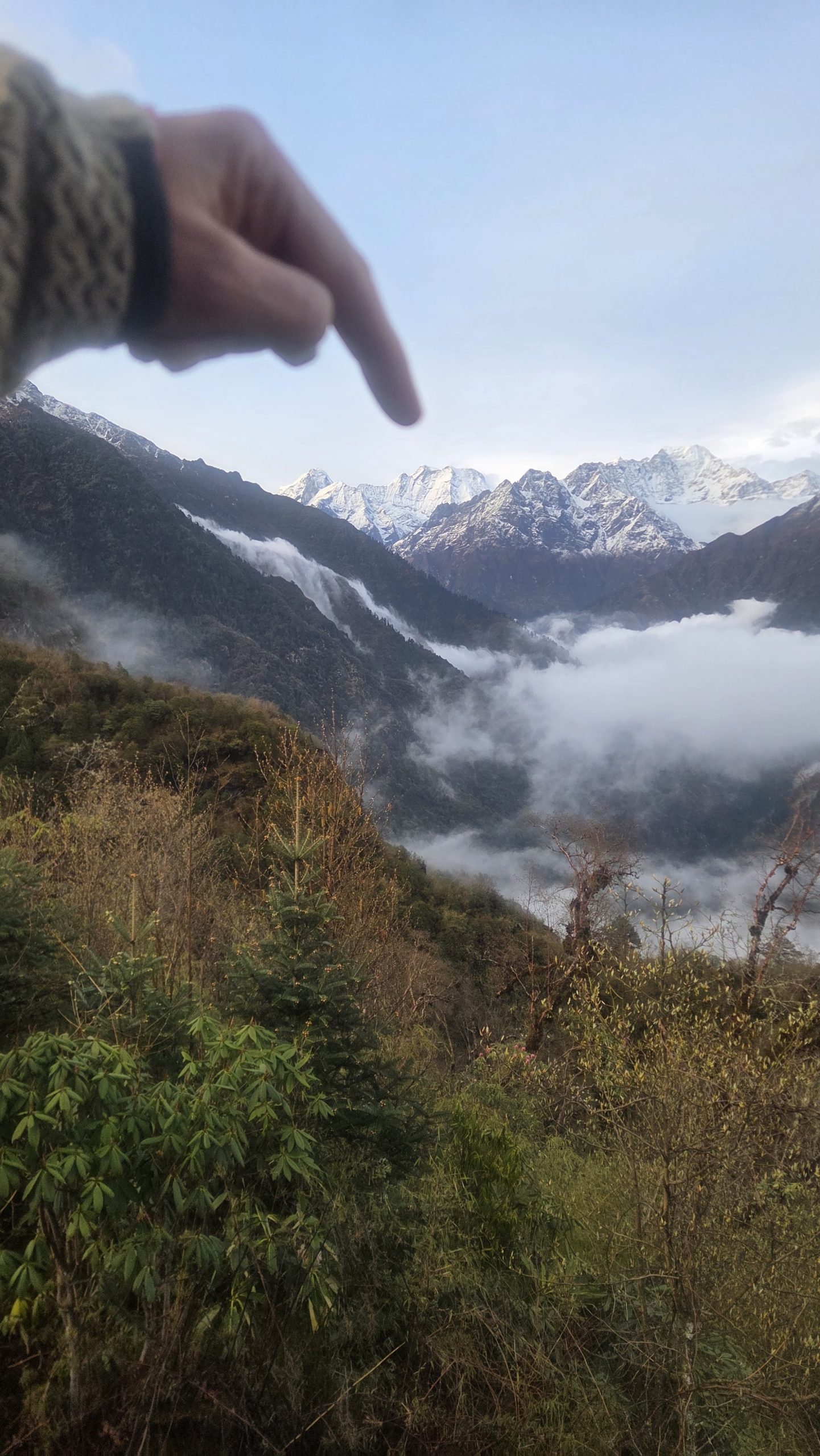
I stepped outside onto the porch with my camera. It was so far in the distance. I remember reaching out my hand as if i was able to touch it but really it was a sign that I wanted it so much.
From trek to expedition
As we gained altitude, the terrain changed. The undulating paths gave way to longer climbs. My focus kept narrowing toward the summit at this stage. I had to keep pulling myself back into the present, intentionally setting my priorities each day, whether it was the changing terrain, a new lodge, Sherpa stew for lunch, or conversations with a team member. Anything but obsessing over the summit that was still days away.
By day eight, arriving in Thangnag (4,358m), one of my favourite stops. We had two nights here for acclimatisation, which gave us time to rest and reset. There was a small local shop where a joyful woman sold handmade crafts.
At the lodge, I spoke with Becky on the climb who was going up with just her guide and porter. I really liked that approach and thought it was brave of her. There are different ways to do this, group or solo and both make sense depending on the person. I’ve tried the solo approach before on shorter trips, and the upside is simple: it’s just yourself you have to manage, without the uncertainty of how others are doing.
I found myself looking around the lodge at the different groups. Some look like they’ve been climbing all their lives, fit and confident. You scan their gear and it’s worn in from other expeditions they may have been on. Either way, coming this far takes effort.
We started seeing the same groups again at tea houses, and some became an extension of our own group. We naturally started chatting to them.
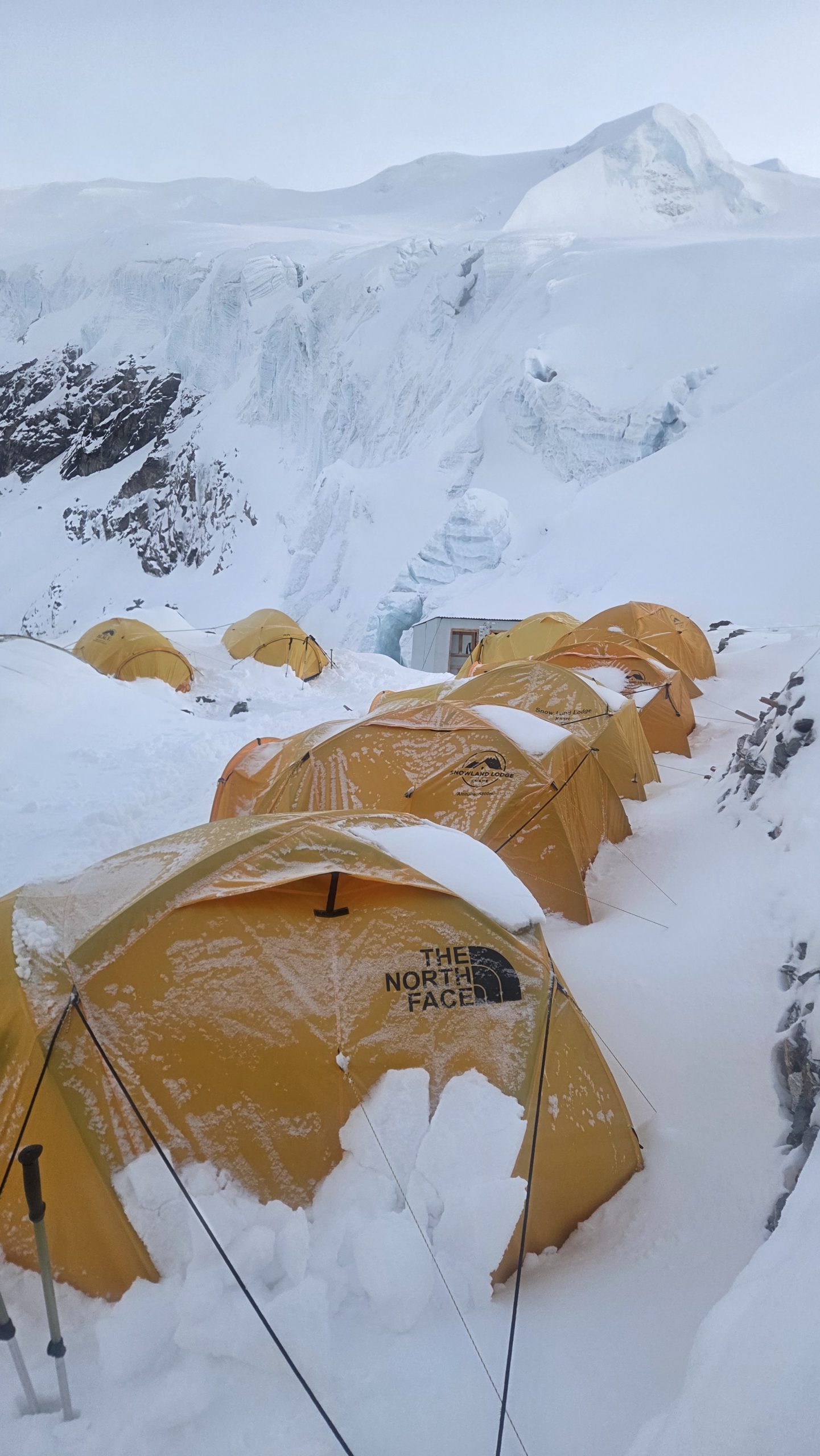
Our final stop before the summit push was Khare. We stayed there for a couple of nights, waiting for a weather window.
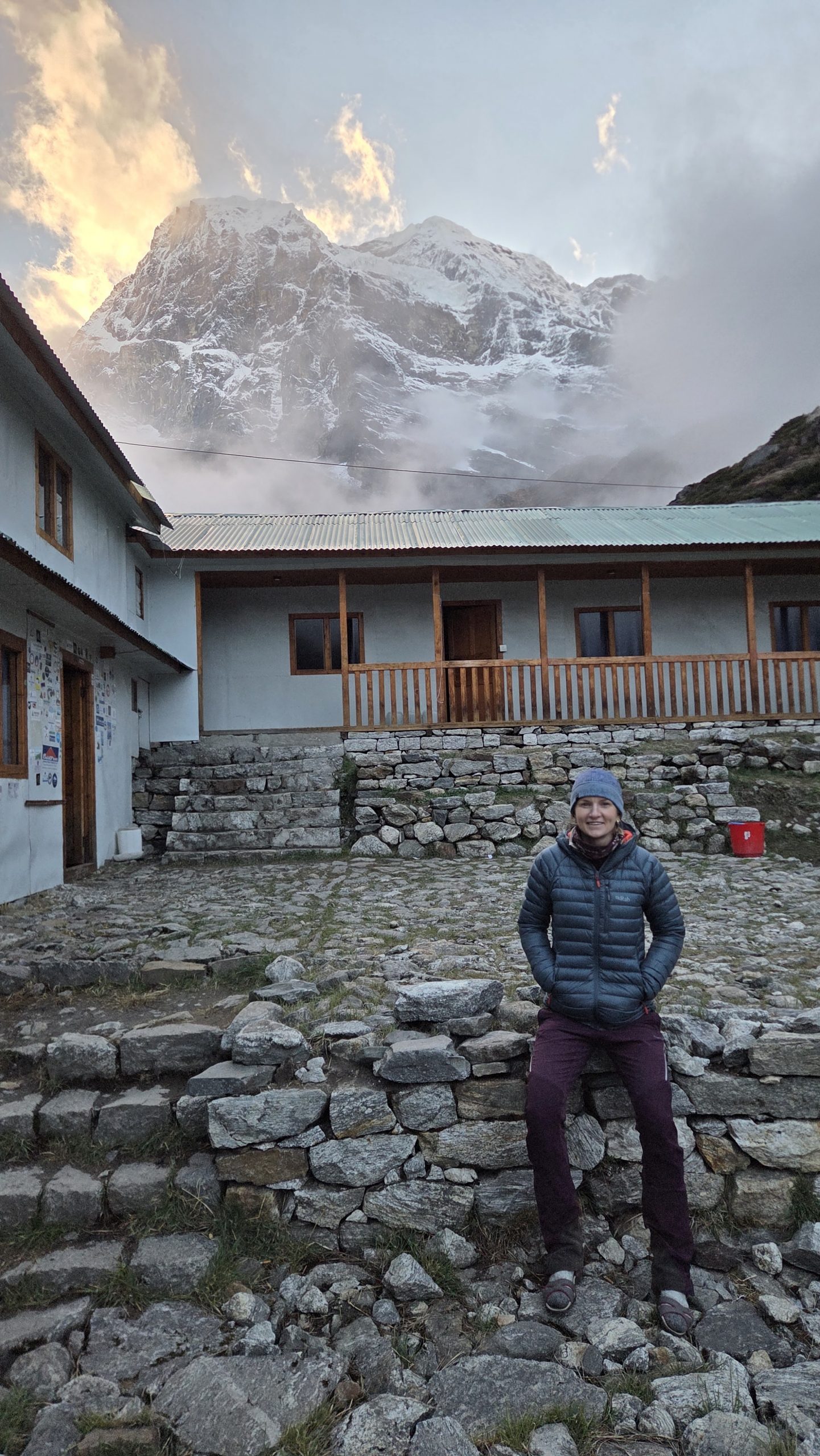
The lodge caught the morning sun, and for a few precious hours each day people would gather in the sunroom. Funnily enough, it reminded me of a care home. People walking about, sipping water, playing cards, and taking afternoon naps.
Yet these were far from ordinary residents. They were mountaineers, all waiting patiently for the mountain to grant them passage. Everyone knew that when the window opened, the pace would change, and the real challenge would begin.
I read more of “Anything Is Possible” by Nimsdai, which leans heavily into mindset and attitude. It was one of those books that fits the environment you’re in.
Each morning, I’d continue my simple check-in: head, fine. body, fine. feet, fine. Then I’d look over at my room mate to see how she was feeling. It helped having another woman on the team. She was also a nurse, which meant she often reassured the group when things felt uncertain.
At this stage, everyone was managing something. It becomes as much internal as it is physical.
I felt more confident in how I was handling the days. Even if I wasn’t 100% I tried not to project doubt onto the group. Energy spreads quickly in environments like this, especially when you don’t fully know people yet.
While in Khare, I met Tyler Andrews, who had been there for weeks training and acclimatising for an attempt on a fastest ascent of Everest without supplemental oxygen. It’s rare to be around people operating at that level in normal life.
High Camp
It’s all about patience and trust in the guides, trusting they’re making the right decisions for the group. So, despite waking up to fresh snow and being told to get ready, we moved today to high camp. We don’t question it, we just pull on our double boots and crampons. The scuffle around the lodge stirred a few nerves in me.
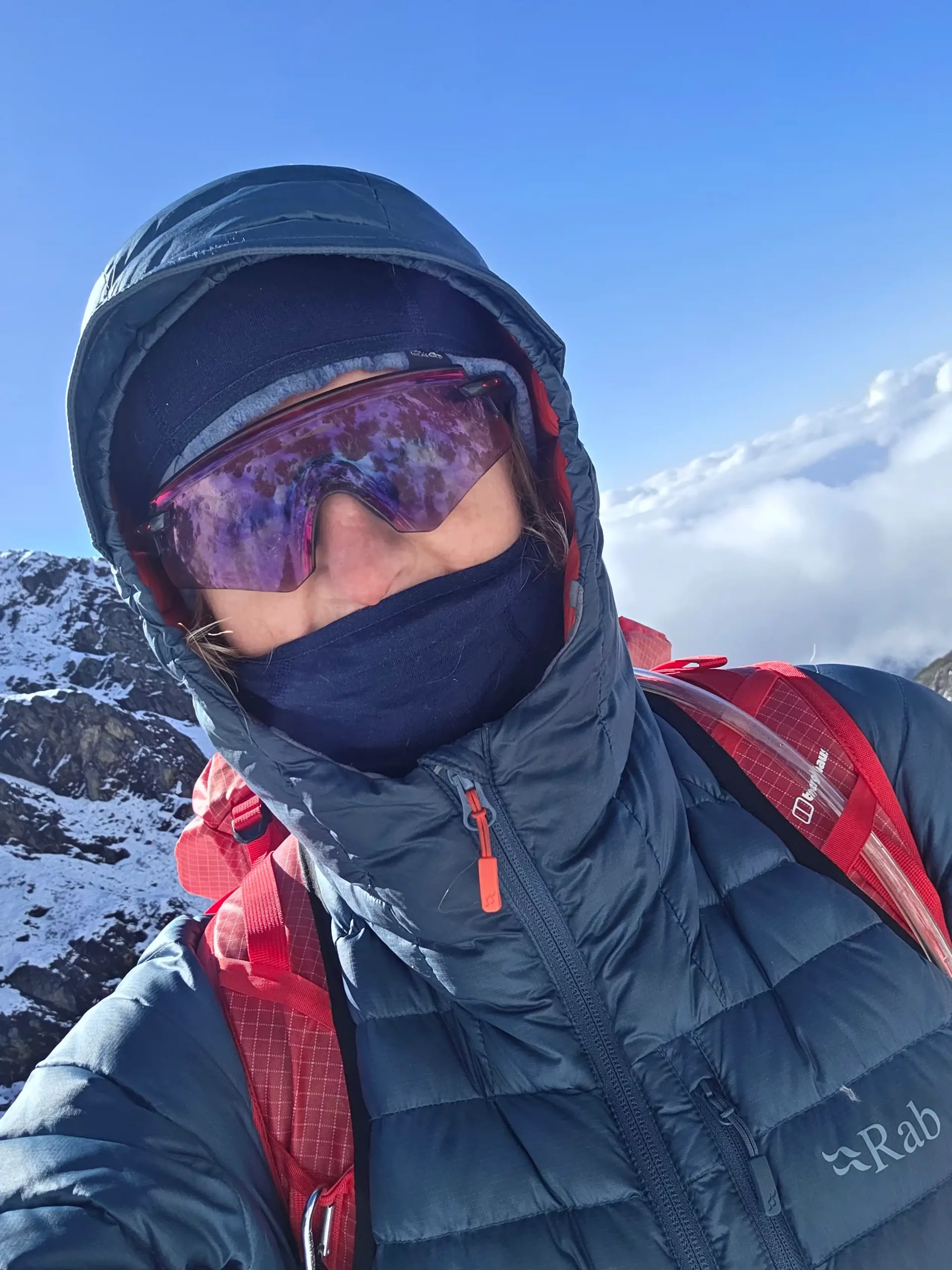
The legs felt heavier than usual, and the terrain tougher with the altitude. I kept telling myself this was normal. We were now above 5,000 metres. At base camp, I took a nausea tablet, please don’t get sick now, you’ve come this far, the internal chatter running in the background.
We passed other groups who had stopped, visibly struggling. Later we heard some had turned back.
Seven hours later, we reached High Camp at 5,800m around 6:30pm. I literally collapsed into my tent, completely exhausted. Every part of me wanted to stay there, but as the light faded I got back up after hearing there were spectacular views of Everest and the Himalayas.
Knowing full well how unpredictable the weather is, and that this view might not come again.
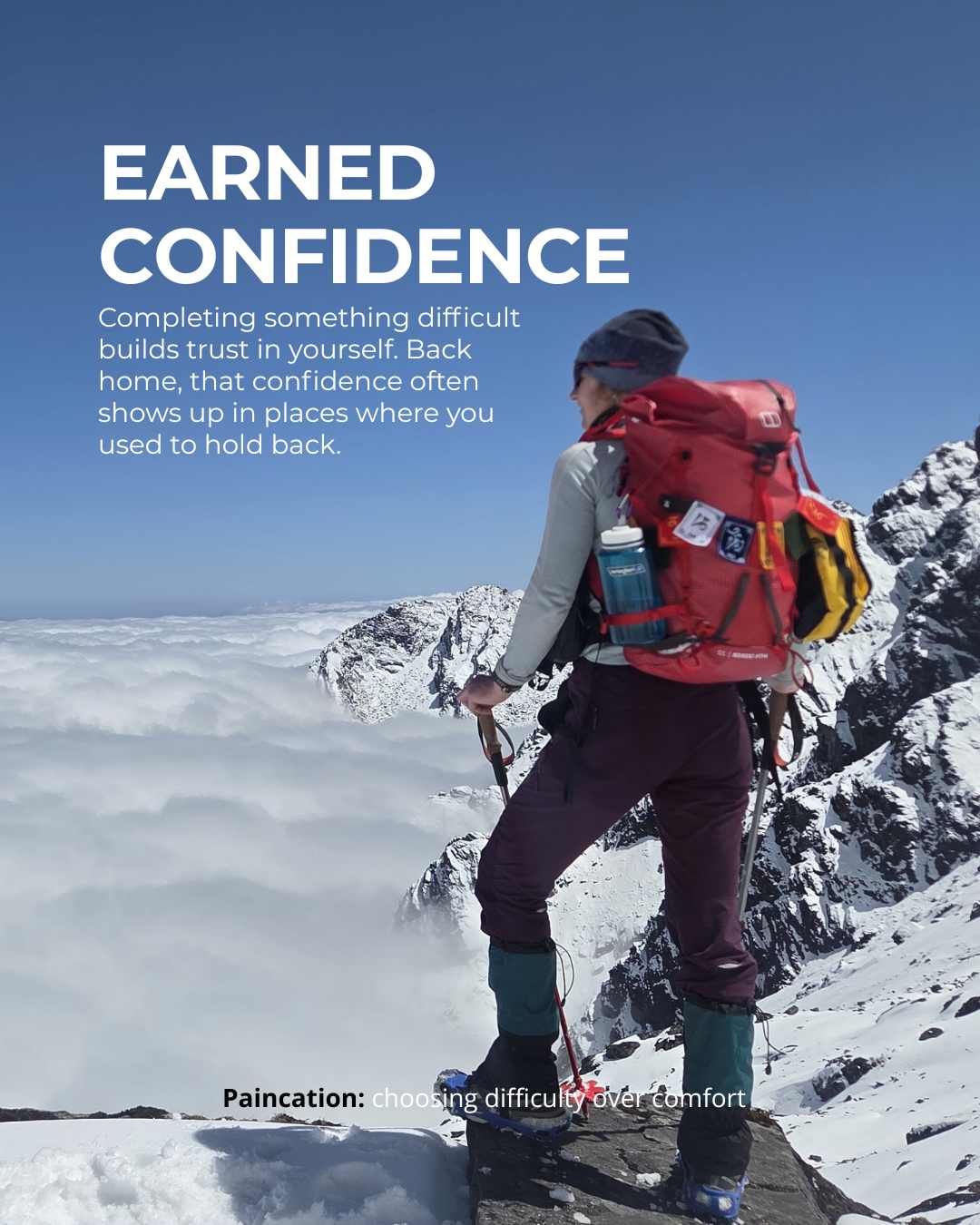
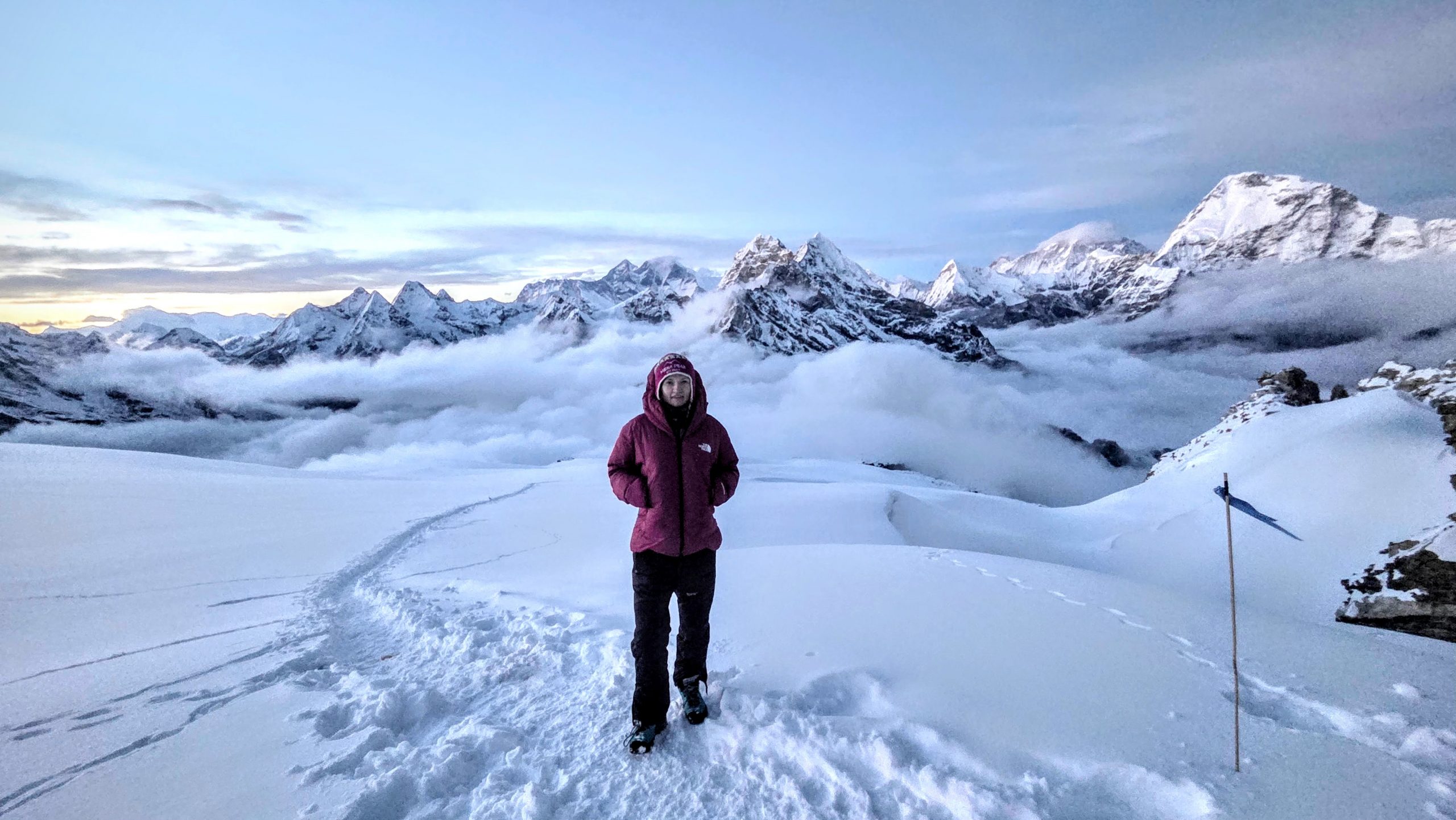
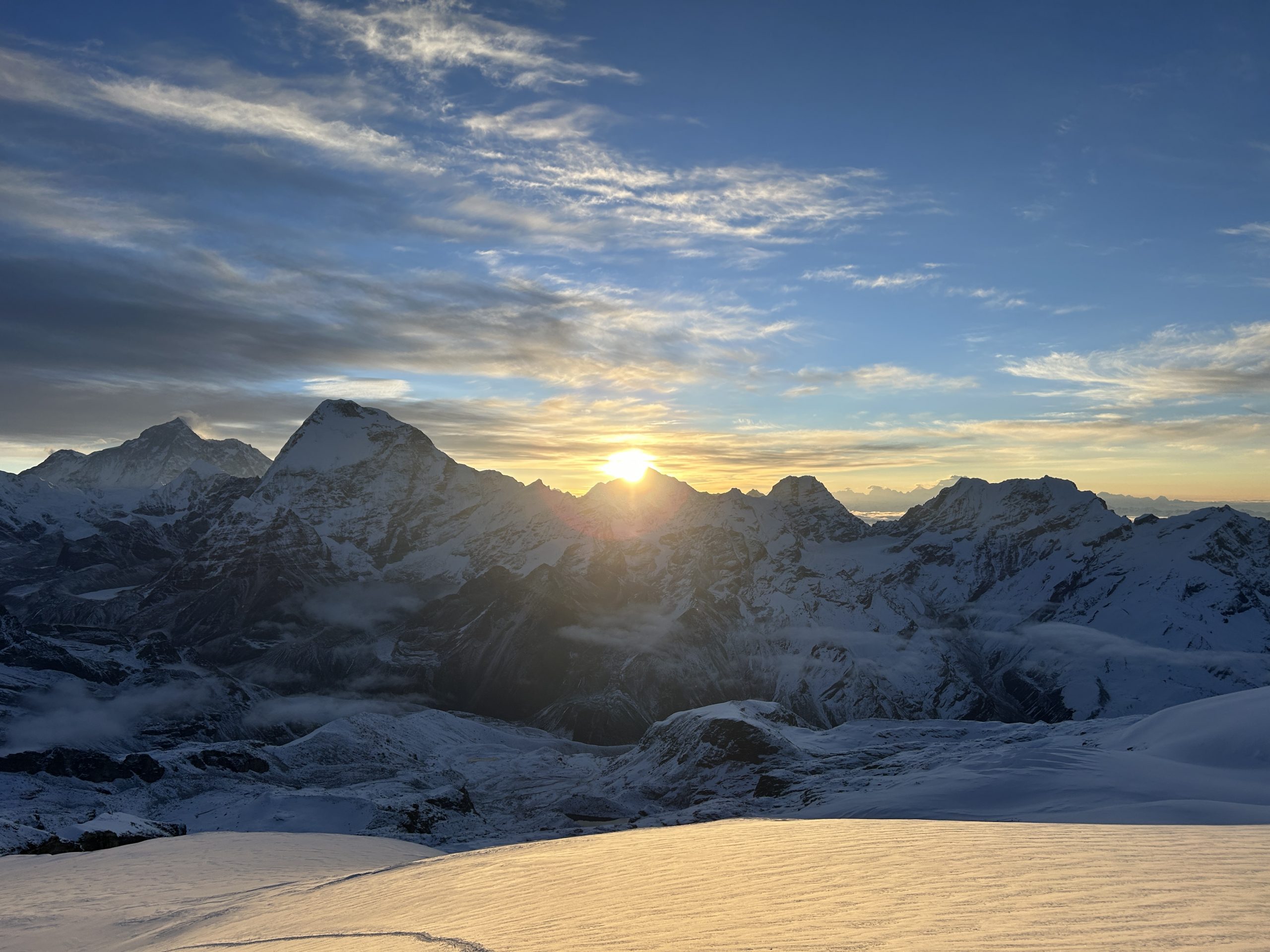
In the distance, there it was: Everest standing tall above the clouds. At that point, I had climbed higher than I ever had before.
I remember standing there thinking how surreal it was. From my decision to attempt Mera Peak to now standing above the clouds on the day before the final push, looking at the highest mountain on Earth on the most beautiful evening with my guide Saroj and my teammate Nikhil.
Looking back, it wasn’t the summit that was most memorable, but that moment at high camp. It still gives me goosebumps thinking about it.
Waking to the alarm at 1:30am, with pitch black darkness outside, I rummaged around for my head torch. I questioned whether I had even slept at all.
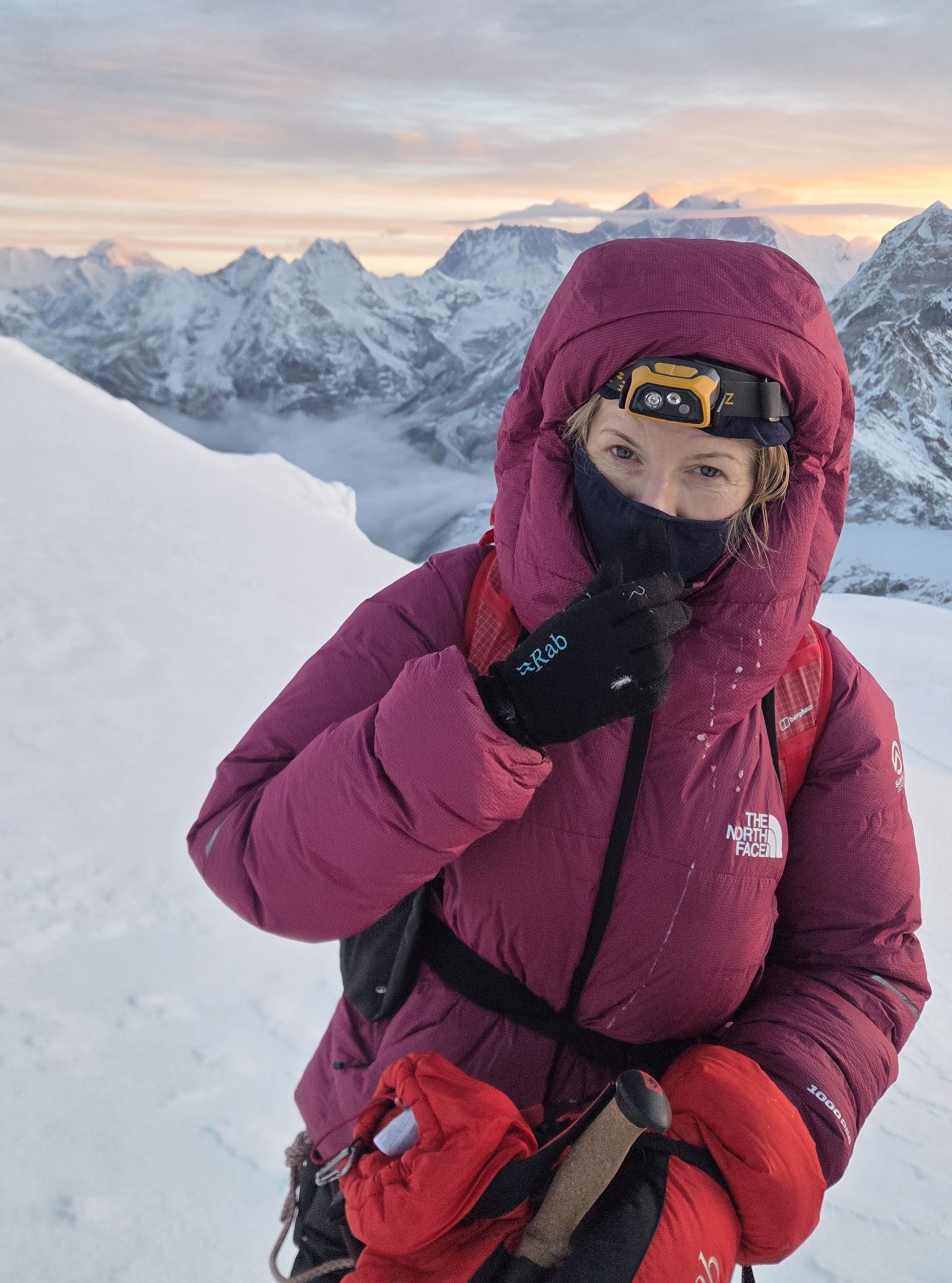
After a quick breakfast in the makeshift kitchen, we roped up in a line and stepped out into the dark. The only sound was snow crunching underfoot, with head torches flickering around our feet. Slowly, the sun began to rise as we ascended.
I looked around and tried to take it all in. I felt acutely aware of how fortunate I was to be there. It was hard to take out a camera while trying to keep a steady rhythm on the rope. If one person stopped, the whole line tugged to a halt.
The climb became a mental game. Every time a slope ended, another appeared beyond it. It was probably best just to keep my head down and walk. At one point, Saroj told us we had “only 400 metres to go.” I remember trying to translate that into something familiar, like a running track, but this time it felt endless. This was one lap I wouldn’t be sprinting! The other guide Osman, was leading from the back, quiet and unassuming, he seemed to miss nothing. We were in safe hands.
There came a moment when I was clipped to Saroj and felt my mind starting to wander into doubtful places. I needed reassurance.
“Will I make it?” I asked.
“Course you will,” he replied.
That was enough.
Hearing those words from someone so experienced, at the moment I felt most uncertain, mattered more than I expected. I was incredibly grateful for his patience, and care throughout the climb.
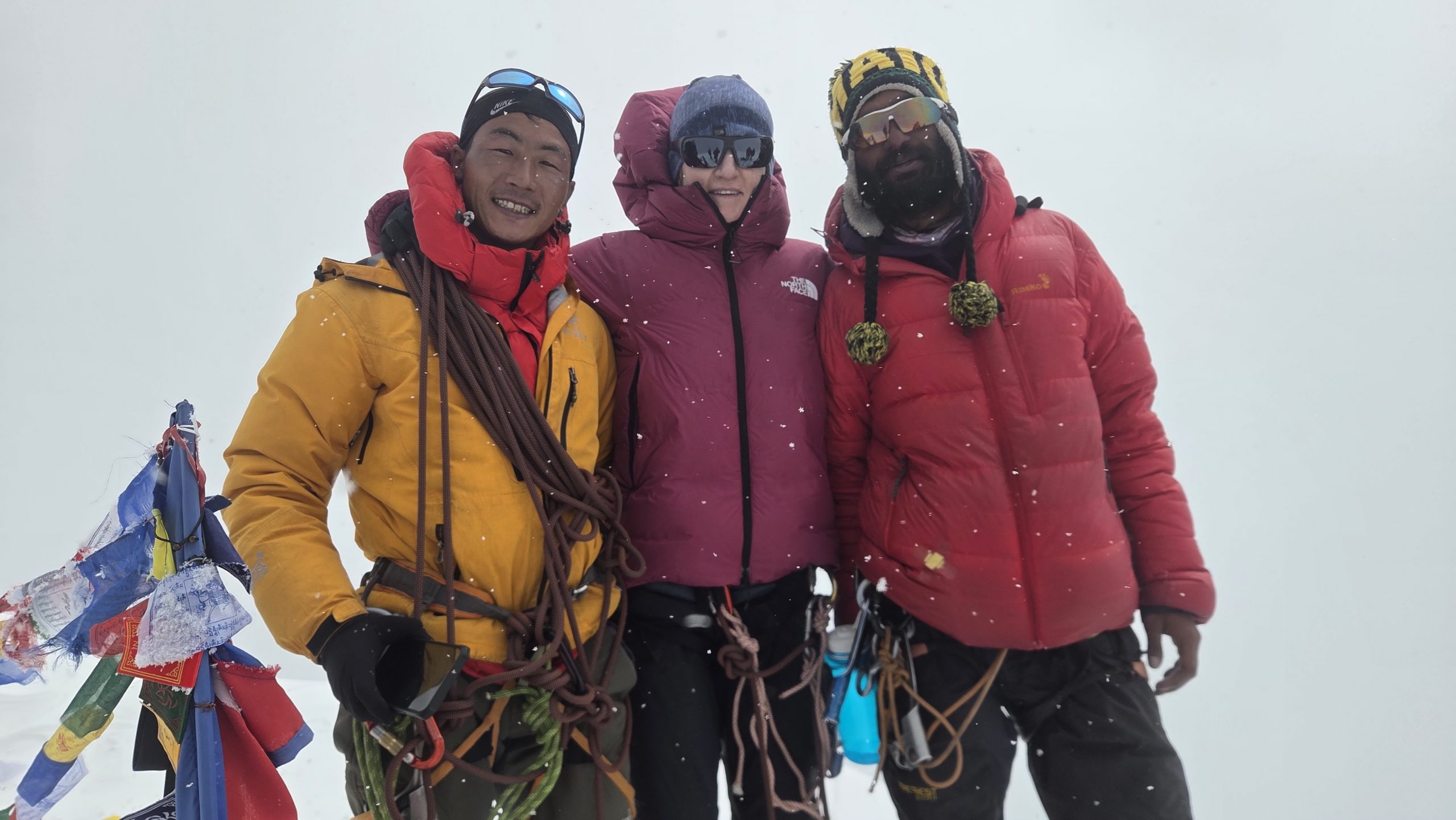
Then the summit came into view, prayer flags fluttering in the wind. I could see familiar faces from earlier in the trek already making their way down.
We reached the summit shortly after. The weather shifted quickly. We took a few photos, but with visibility poor there wasn’t that jaw-dropping moment of looking out across the Himalayas.
The focus now was on getting back down safely.
The descent was long and tiring. By the time we were heading back towards Khare, I felt like I could have happily fallen asleep in the snow for a few minutes.
Back at the lodge, we were welcomed with open arms by the guides who had stayed behind. They had faced their own challenges while we were on the mountain, including caring for two team members who had become seriously ill and required a helicopter evacuation. Moments like these showed their professionalism. One minute they were laughing and joking with us on the trail; the next they were calm, composed, and completely in control when it mattered most.
In the days that followed, I found myself replaying the experience with my teammate Nikhil, reliving the small victories along the way while also finding humour in the hard parts.
“Are we there yet?” was a phrase I must have said more than a few times.
Once you’re back home, it’s hard to explain an experience like this to people who weren’t there. They can understand the outcome, but not always what it felt like to live it. Having time on the descent and later back in Kathmandu to go over everything was something I really appreciated.
A couple of days later, I finally got Wi-Fi and called home to share the news. Then came the message to the family WhatsApp group:
“I did it.”
I sent photos and videos from the summit, and my family were thrilled. After days of focusing only on the next step, the next lodge, the next meal, I could finally step back and appreciate what had happened.
I’d climbed Mera Peak.
Reflection
People often ask what changes after something like this.
It’s subtle. The lessons reveal themselves over weeks and months. You start to trust yourself a little more. If I can do this, then maybe I can do the things I’ve been putting off in other parts of life.
Mera Peak had been in my mind for two years. Looking back, the timing only worked once I stopped circling the idea and made a decision. It wasn’t an average trip, and it’s certainly not something to take lightly. But at some point, I realised that most of the barriers were self-made. The gap between thinking about something and actually doing it is usually smaller than it feels.
The experience also made me think about how much we are influenced by the people around us. Sometimes we don’t pursue things simply because nobody in our immediate circle is doing them. We unconsciously adjust our ambitions to fit what feels normal.
I’m fortunate to be surrounded by people who value fitness, and personal growth. It’s a supportive community where pushing yourself is encouraged. Not everyone has that. If you’re surrounded by limiting beliefs, it’s easy to start adopting them as your own. The people around us shape what we believe is possible.
You can always find an excuse, or you can find a way.
Sometimes you just have to step outside your routine, feel the fear, and let the experience unfold.
For me, Mera Peak was never just about reaching a summit. It was about proving to myself that I could.